PREMISE:
This article is based on scientific, university, and clinical trials. It is not intended to create false illusions and/or promise miraculous cures. Each body reacts differently, and therefore, results may vary from person to person. In any case, it is recommended to consult your doctor.
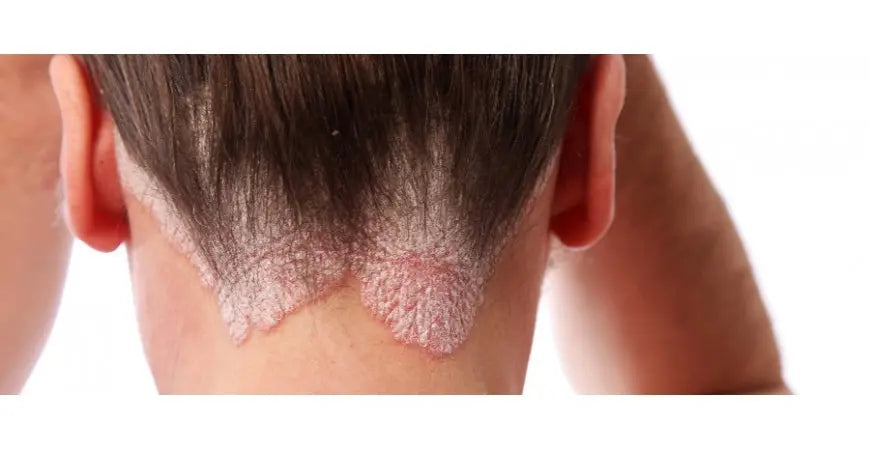
Before revealing why Aloe Arborescens can be a remedy for psoriasis, we want to share some facts: Psoriasis is a skin disorder that affects approximately 1-2% of the world's population. It is a chronic skin inflammation characterized by sharply defined, rounded plaques and papules covered with silvery micaceous scales.
Psoriasis skin lesions are inconsistently itchy. Researchers have not yet fully identified the causes of psoriasis. Approximately 50% of patients report a positive family history, and some studies suggest that T lymphocytes play a significant role in the pathogenesis of the disease.
So among the primary risk causes we can have:
- Genetic factor
- Infectious processes
- Lifestyle
Among the various factors we cannot exclude a lowering of the immune defenses also caused by stress.
A recent study (Shin, 2011) investigated the action of Aloe Arborescens on the dry skin of 20 patients suffering from xerosis (one of the most characteristic symptoms of psoriasis) by examining the clinical effects of a cream containing Aloe Arborescens gel.
The randomized, controlled study showed that applying the cream for two weeks improved the overall condition of the skin (softness and elasticity) in 71% of cases, with no adverse effects. However, the treatment did improve skin hydration.
For several years, anthraquinones have been proposed as antipsoriatic agents, for which a structure-pharmacological activity relationship has been established, even if the mode of action of these compounds is not very clear. The total extract of Aloe Arborescens contains, among others, anthraquinones and acemannan, and it is known that anthraquinone derivatives inhibit in vitro Various viruses, such as herpes simplex types 1 and 2, varicella zoster, and influenza, exist. There are differing schools of thought regarding the function of anthraquinones as antipsoriasis agents.
In a randomized clinical study (Syed et al.,1996) also published in Pubmed conducted on 60 patients (36 males and 24 females aged between 18 and 50 years) with mild to moderate chronic plaque psoriasis and PASI (disease extent and severity index) values between 4.8 and 16.7, it was observed that a cream containing Aloe extract, applied 3 times a day for 4 weeks, led to an improvement in the clinical picture with a significant reduction in psoriatic plaques and a drop in the PASI value equal to 2.2 (mean value) in 88% of patients.
The study concluded after 12 months. Aloe cream treatment was well tolerated by all patients, with no drug-related adverse symptoms and no need for discontinuation.
“Aloe Arborescens, together with calendula and other precious natural extracts, create a synergistic effect that yields excellent results against psoriasis.”
Our advice is to use the following remedy:
Cicatril gel , a mix of phytotherapeutic extracts with excellent properties: GO TO THE PRODUCT
Bibliography:
The article you just read is an excerpt from the book Aloe: Botanical, Chemical, Pharmacological, and Clinical Aspects.
Authors: Raffaele Capasso1 – Massimiliano Laudato2 – Giuliano Grandolini3 – Francesco Capasso4
1) Raffaele Capasso – researcher at the University of Naples “Federico II”